
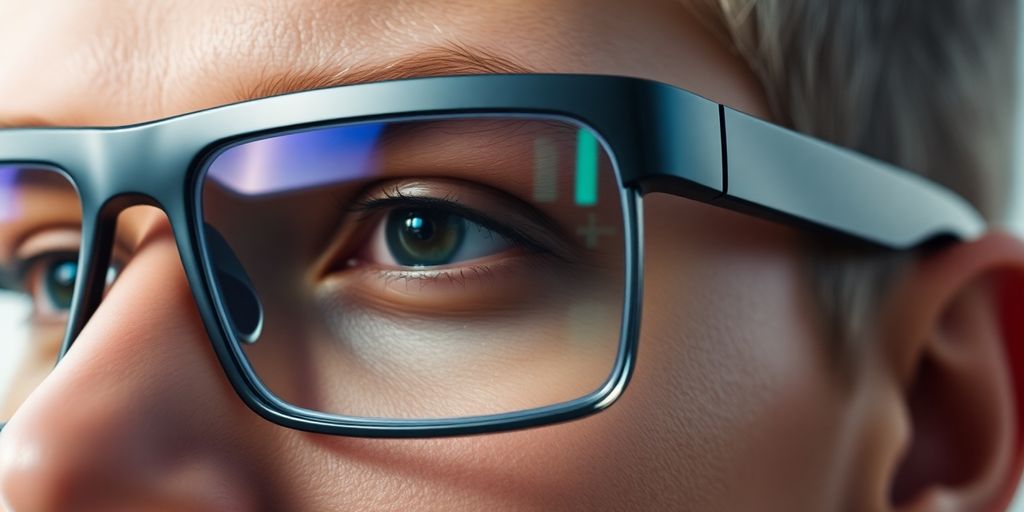

Artificial intelligence is revolutionising assistive technology, with new AI-powered smart glasses offering unprecedented support for visually impaired individuals. These innovative devices can read menus, describe surroundings, and even recognise people, significantly enhancing independence and daily life for those with low vision.
A New Vision for Accessibility
Startups and tech giants alike are developing smart glasses that leverage AI to interpret the visual world and translate it into auditory cues. Companies like Fovionics and Envision, in collaboration with eyewear brands like Solos, are at the forefront of this movement. Their goal is to create affordable, user-friendly devices that empower the blind and visually impaired community, reducing reliance on sighted assistance.
Key Takeaways
Enhanced Independence: AI-powered smart glasses can read text, describe environments, and identify objects, enabling users to navigate and interact with their surroundings more autonomously.
Technological Advancements: These glasses integrate advanced camera sensors and sophisticated AI models, including those from Meta, Google, and OpenAI, to process visual information.
Affordability Focus: Several companies are working to bring down the cost of assistive technology, making these life-changing devices more accessible.
User Interaction: Users interact with the glasses through voice commands, receiving information via built-in speakers, with some models offering directional audio and haptic feedback.
Features and Functionality
The capabilities of these smart glasses are extensive. They can read menus in restaurants, decipher text on documents or signs, and provide real-time descriptions of a user's environment. Some models can even recognise familiar faces, offering a more personalised experience. The technology typically works by connecting to a smartphone app via Bluetooth, with the AI processing visual data in the cloud before relaying the information back to the user through discreet speakers in the glasses' frames.
Addressing the Cost Barrier
Historically, assistive technologies have been prohibitively expensive. However, the development of smart glasses by companies like Fovionics aims to change this. By focusing on making these devices affordable, they hope to democratise access to life-enhancing technology. For instance, the Ally Solos glasses are available for pre-order at a significantly reduced price, with plans for further cost reductions as the technology becomes more mainstream.
The Future of Assistive Eyewear
The integration of AI into smart glasses represents a significant leap forward in assistive technology. As AI models continue to evolve and hardware becomes more sophisticated and integrated, the potential applications are vast. Future iterations may include enhanced navigation features with GPS integration, magnification, and contrast enhancement for those with partial sight, further revolutionising how visually impaired individuals experience the world.