
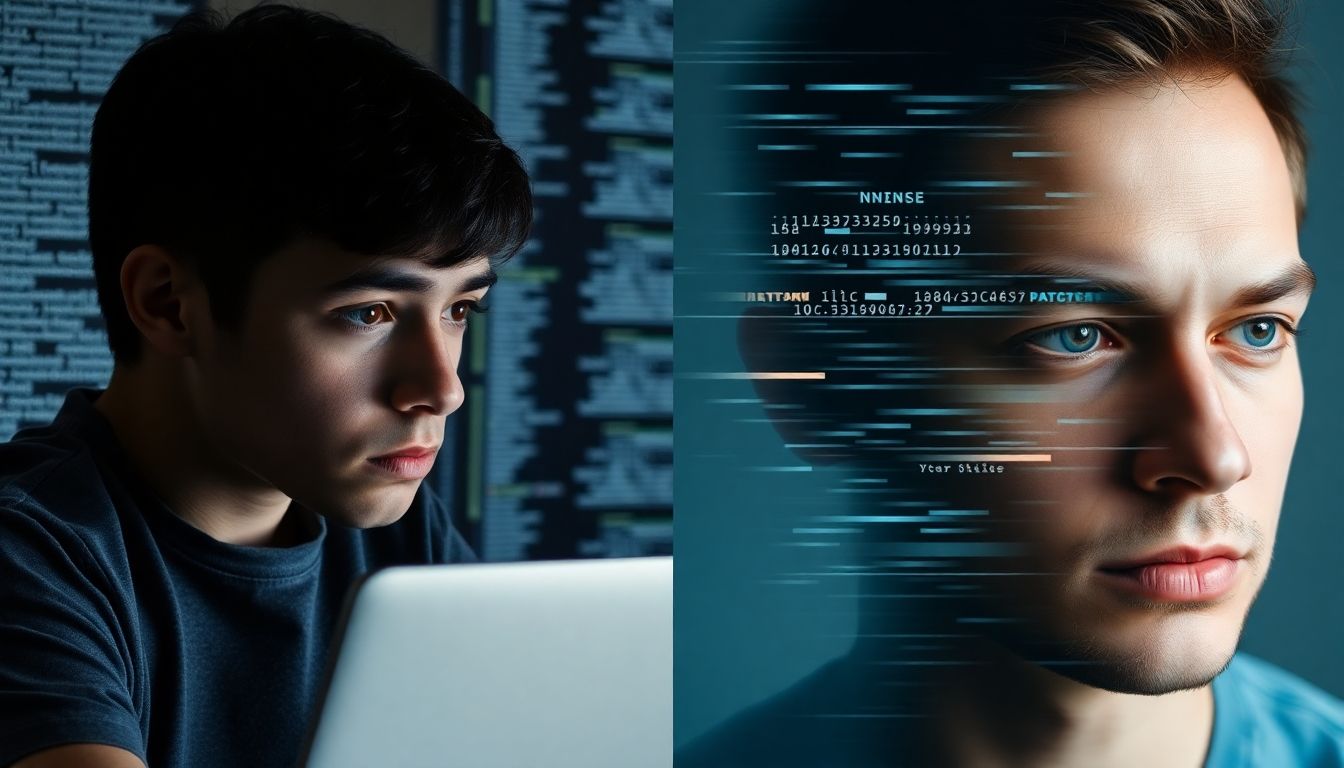

A significant portion of pupils and students are finding it increasingly difficult to distinguish between authentic and AI-generated content, raising alarms about the spread of misinformation. While many young people are embracing AI tools for their education, a concerning number lack the critical skills to identify inaccuracies, leading to potential vulnerabilities in navigating the digital landscape.
Key Takeaways
A large majority of teenagers use AI for schoolwork, but over half find it challenging to determine the truthfulness of AI-generated content.
Students report benefiting from AI for skill development, yet a substantial percentage struggle with discerning AI-generated misinformation.
Educators are also grappling with AI, with many students feeling their teachers lack confidence in using these tools.
The ease with which AI can create convincing fake content, including text, images, and audio, poses a significant challenge to information literacy.
The Growing Challenge of AI Misinformation
Recent reports highlight a worrying trend: students are struggling to identify AI-generated misinformation. A survey by Oxford University Press (OUP) revealed that over half of teenagers aged 13 to 18 found it difficult to ascertain the truthfulness of AI content. This comes as a vast majority of these students, around eight out of ten, are actively using AI for their schoolwork and revision.
While students acknowledge the benefits of AI, citing improvements in problem-solving, creative writing, and critical thinking, the inability to discern fake content is a significant concern. Assistant headteacher Dan Williams noted that many students are simply copying and pasting AI outputs without the necessary knowledge base to verify their accuracy. Even educators, like Mr. Williams himself, admit to struggling to identify AI-generated individuals in videos.
The Need for Enhanced AI Literacy
Experts emphasize the urgent need for increased AI literacy among young people. Robbie Torney from Common Sense Media points out that if only about 4 in 10 teens can identify inaccurate content, this number is alarmingly low given the prevalence of generative AI. Schools are seen as crucial in developing students' understanding of AI's strengths and weaknesses, and how to use it responsibly.
Educators are advised to acknowledge the rapid pace of AI development and facilitate conversations about responsible usage. While teachers may not need to be AI experts, their experience and critical thinking skills are invaluable in guiding students through the complexities of AI-generated content. Resources are being developed to help both teachers and students navigate this evolving digital environment.
The Deceptive Nature of AI Content
Artificial intelligence can now generate highly convincing fake content, including text, images, and audio, often referred to as deepfakes. These can range from fabricated celebrity images and political misinformation to false scientific claims. The ease and speed with which AI can produce such content, sometimes within minutes, make it a powerful tool for spreading disinformation.
Research indicates that humans may even be more likely to believe AI-generated disinformation than content created by humans. Studies have shown that AI-written false tweets were more readily believed than human-written ones. This is partly attributed to AI's ability to produce more structured and condensed text, making it easier to process and potentially more persuasive.
An Evolving Arms Race
The challenge of combating AI-generated misinformation is likened to an arms race. While AI tools are becoming more sophisticated at creating fakes, researchers are developing methods to detect them. However, these detection tools are still in their early stages and face the constant challenge of keeping up with advancements in AI generation. Digital watermarks are also being explored as a means to verify authenticity, but these too have limitations.
Ultimately, education is considered one of the most effective defenses. Encouraging critical thinking, questioning the source of information, and cross-referencing facts are vital skills for navigating the digital age. As AI continues to evolve, fostering a generation equipped to critically evaluate online content is paramount.