
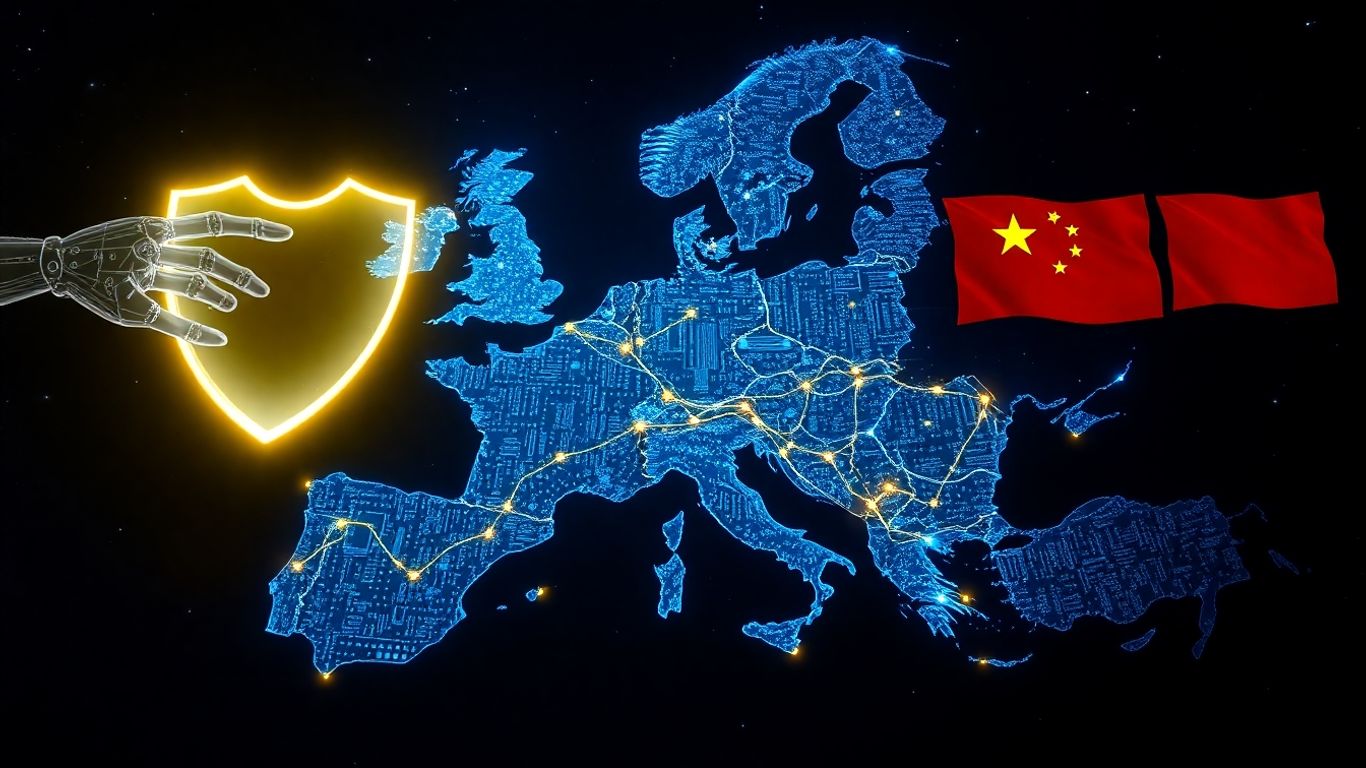

The European Union has announced a sweeping new strategy aimed at promoting homegrown artificial intelligence technologies, seeking to curb its dependence on US and Chinese digital giants. The move comes as Brussels tries to balance the need for innovation with its tradition of strong tech regulation, in a rapidly evolving geopolitical landscape.
Key Takeaways
The EU’s new AI strategy puts a spotlight on building European-made platforms for crucial sectors.
The bloc seeks to balance innovation with ethical safeguards, upholding its regulatory leadership.
Europe’s digital sovereignty hinges on investment, infrastructure, and reducing reliance on foreign providers.
A Shift Toward Homegrown AI
At the heart of the EU’s new "Apply AI strategy" is a drive to nurture European-based AI tools within core sectors like healthcare, manufacturing, and defence. This initiative reflects urgent concerns over strategic dependencies, particularly as tensions with the US and China escalate over technology and security.
This push is not just about catching up on innovation, but about ensuring that the region’s critical sectors are not left vulnerable to foreign control. The EU aims to foster local champions, bridging the gap with US and Chinese tech giants who currently dominate the foundational AI models and infrastructure.
Balancing Regulation and Innovation
For years, the EU has emphasised the importance of ethical standards and robust regulation—seen in landmark laws like the AI Act and GDPR. However, stricter rules have drawn criticism for potentially hampering Europe’s ability to keep pace with more agile rivals. Now, Brussels is walking a fine line: the deregulatory shift is seen as a move to boost competitiveness, but there are concerns that this could weaken the very safeguards that define the EU’s digital identity.
European officials argue that regulation and innovation need not be mutually exclusive. The new approach envisions dynamic governance: maintaining strong oversight but supporting pioneering research, targeted funding, and new public-private partnerships.
Tackling Structural Weaknesses
Despite its regulatory prowess, Europe still trails the US and China in AI investment, infrastructure, and talent. Recent data suggests only a small share of global AI venture funding makes it to European firms, and a fragmented digital market has held back the bloc’s ambition to raise 75% of firms using AI by 2030.
To tackle these challenges, the EU is advancing projects like the EuroStack—a secure digital infrastructure designed to reduce reliance on foreign cloud providers and chips. Major investments are planned in so-called AI ‘factories’ across member states, combining supercomputing power and research for European innovators.
Critical Sectors and Security
The strategy also acknowledges the dual-use nature of AI, with applications in both civilian and military domains. While promoting innovation, the EU stresses the need for democratic oversight and safeguards, given the growing role of AI in national security. Recent calls highlight the importance of harmonising standards across the bloc, especially for sensitive uses.
Looking Ahead: Can Europe Lead?
The EU’s new AI blueprint signals a determination to be more than just a global rule-setter—it wants to shape the next wave of digital innovation. Success will depend on whether Europe can close its investment gap, forge a unified digital ecosystem, and maintain its commitment to trustworthy and responsible AI.
As the world’s tech race accelerates, the coming years will show if this measured yet ambitious strategy puts Europe firmly back in the AI game.