
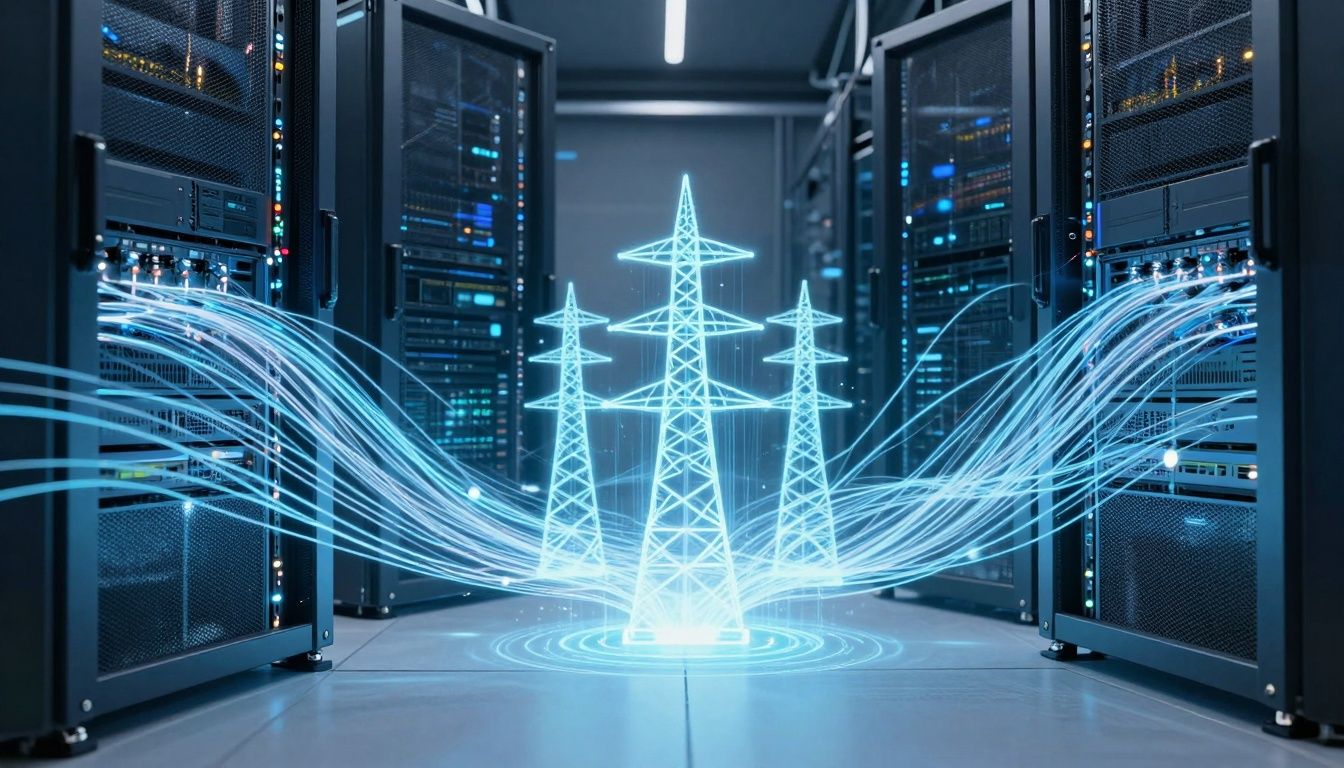
The AI revolution is here, and it's thirsty for power. But what if the very technology driving this demand could also be the solution to our aging energy grid's problems? Imagine AI data centres that don't just consume energy but actively help manage and stabilise the power grid, turning a potential crisis into a massive opportunity for cleaner, cheaper energy.
Key Takeaways
- AI's rapid growth is straining existing power grids, leading to potential blackouts, higher costs, and increased reliance on fossil fuels.
- The concept of "flexibility" in AI data centres is key – allowing them to adjust power consumption dynamically.
- By being flexible, AI data centres can absorb excess energy during off-peak times and reduce demand during peak hours, effectively acting as a buffer for the grid.
- This flexibility can unlock massive new AI capacity without requiring immediate, costly grid upgrades.
- AI can help integrate more renewable energy sources like solar and wind.
The Looming Energy Crisis
The AI boom is happening at an unprecedented speed. We're seeing massive growth in AI data centres, which are huge consumers of electricity. The problem is, our current power grid, especially in places like the US, is old and wasn't built to handle this kind of surge in demand. This creates a historic collision course between two multi-billion dollar systems: the fast-growing AI data centre network and the old, unprepared electricity grid.
This isn't just an inconvenience; it's a serious issue with several consequences:
- Stalling AI Innovation: In some areas, it can take years to connect new data centres to the grid. This bottleneck could slow down America's progress in AI.
- Rising Energy Costs: The increased demand from data centres is already driving up electricity prices for everyone. In 2025 alone, data centre demand caused average annual household energy bills to jump significantly in some cities.
- Fossil Fuel Reliance: To meet the immediate, reliable power needs of AI, there's a risk of increased reliance on fossil fuels like natural gas, and even coal in some countries, leading to higher carbon emissions.
By 2030, data centres are expected to make up 12% of US energy demand – that's like adding another Germany to the grid's load.
AI As The Grid's Ally: The Power of Flexibility
But what if AI could be part of the solution? The answer lies in something called flexibility. This isn't about using less energy overall, but about using energy more intelligently. Think of the power grid like a highway. It gets really busy for a few hours each month during peak demand, like on a hot summer day when everyone's air conditioning is on full blast. During these peak times, the grid is under immense pressure, and adding more demand from data centres could be disastrous.
However, for most of the year, power plants aren't running at full capacity, and transmission lines aren't carrying their maximum load. On average, about half of the power system's capacity goes unused throughout the year. This is where AI data centres can step in.
If AI data centres can be programmed to be slightly more flexible – meaning they can dynamically adjust their power consumption – they can make a huge difference. During those few peak hours, they could temporarily reduce their demand. Then, when there's plenty of energy available, they can ramp up their usage.
This is like temporarily taking some large trucks off the highway during rush hour so that the remaining traffic can flow smoothly. Studies show that if AI data centres are flexible for just a small fraction of the year, reducing demand by a quarter for a few hours at a time, America could add up to 100 gigawatts of new AI capacity onto existing grids. That's potentially trillions of dollars in AI investments unlocked without waiting for years for new infrastructure.
How AI Can Be Flexible: Temporal and Spatial Resilience
So, how do we make AI data centres flexible? It involves a concept called "spatiotemporal resilience", which breaks down into two main ideas:
- Temporal Resilience (Time Flexibility): Not all AI tasks are created equal. Some tasks, like training large language models or running complex scientific simulations, are "burstable." They are important but don't need to be completed at an exact moment. Software can intelligently pause or slow down these workloads when the grid is stressed and then speed them back up when more energy is available.
- Spatial Resilience (Location Flexibility): While you can't pause a chatbot's response, you can move that computation across the country almost instantly. Even if we're struggling to build more electricity transmission lines, we can use the existing fibre optic network to move AI workloads from a data centre in a stressed area (like Phoenix on a hot day) to a data centre in a region with abundant energy (like the wind-swept Great Plains). The AI job gets done, but the grid gets a break when it needs it most.
This essentially turns data centres into smart, cooperative partners with the power grid. AI is managing AI, ensuring that workloads are completed efficiently while also supporting grid stability.
Real-World Demonstrations and The Path Forward
This isn't just theory. Demonstrations have already shown this concept in action. In Phoenix, Arizona, a setup with 256 AI servers successfully reduced their computational power demand by 25% for three hours during a peak demand period, all while maintaining performance for critical AI tasks. The flexible workloads performed above acceptable limits, proving that AI data centres can indeed "bend" when the grid is tight and "move fast" when users need them.
The next big challenge is getting the massive energy and AI industries to collaborate and change how they operate. For over a century, energy utilities have assumed their users can't easily reduce consumption during peak times. But AI data centres are different. They are huge energy users, respond faster than large industrial facilities, and can move workloads across the country – capabilities no other energy user has.
Initiatives are already bringing these industries together. Through collaborations, AI workloads are being shown to move across regions, and software is being developed to coordinate AI tasks with on-site energy equipment like batteries. Partnerships are also creating reference designs for next-generation AI factories that are inherently grid-friendly, allowing utilities to connect them more quickly.
A Brighter, More Powerful Future
So, what does this all mean? Instead of waiting years for grid upgrades, we can build the AI infrastructure we need now, maintaining our competitive edge. Instead of grid failures, flexible AI data centres can prevent blackouts by providing relief before the grid reaches its breaking point.
Rather than energy prices skyrocketing, they could actually decrease as flexible AI data centres make better use of existing power infrastructure, delaying costly upgrades. And instead of relying solely on fossil fuels, the growing energy needs of AI can actually encourage more clean energy development. Solar power, the cheapest and fastest-growing energy source, can be better integrated as AI data centres increase their consumption to match solar peaks or shift workloads to better utilise clean energy.
The AI revolution is here, and it doesn't have to come at the expense of our energy grid. By embracing AI-driven flexibility, we can achieve incredible AI innovation, massive investments, and abundant, affordable, reliable, and clean energy for everyone. AI can indeed be the cornerstone of our future energy system.