
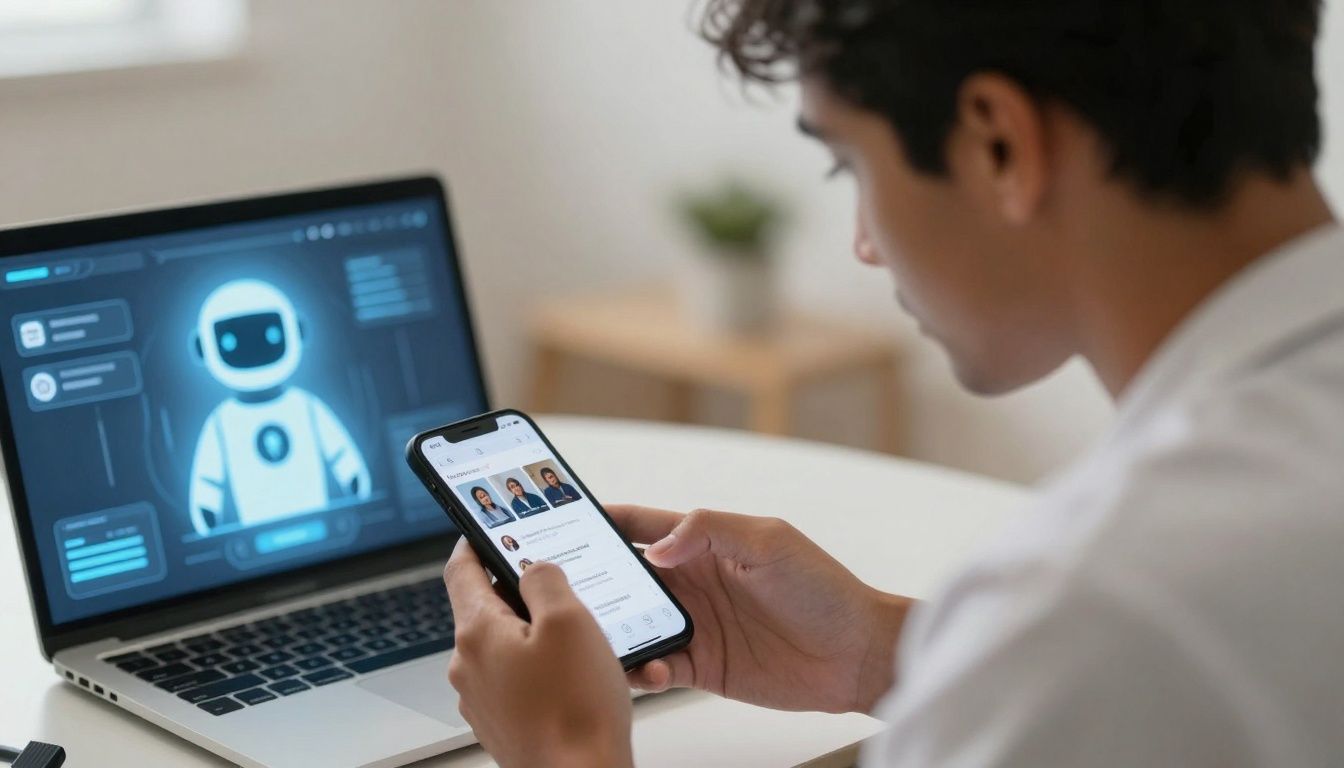

A growing number of young adults are turning to artificial intelligence chatbots and social media platforms for health advice, often bypassing traditional healthcare providers like the NHS. This trend raises significant concerns about the accuracy and reliability of the information being accessed, with a blurred line between helpful guidance and dangerous misinformation.
Key Takeaways
- Young men and individuals from ethnic minority backgrounds are more likely to seek health information outside of NHS channels.
- AI chatbots and social media influencers are not medical professionals and lack accountability.
- There's a risk of users being misled by commercial hype or misinformation, potentially leading to serious health consequences.
- The NHS is urged to increase its online presence and digital health literacy initiatives to meet users where they are.
The Rise of Digital Health Seekers
Recent findings indicate a significant shift in how younger demographics, particularly men, are accessing health information. Approximately one in five men under 35 report using AI bots like ChatGPT for health queries or symptom checks, a figure notably higher than for women in the same age group. Social media platforms, including TikTok, Instagram, and YouTube, are also popular, with 37% of women aged 18 to 24 using them for health-related content.
This trend is particularly pronounced among certain demographic groups. Nearly a third of men aged 18 to 24 use social media for health information, and a quarter of men from ethnic minority backgrounds do the same, compared to 16% of white men. Furthermore, 18% of ethnic minority men use AI tools for health advice, versus 7% of white men.
Concerns Over Misinformation and Accountability
Experts and health bodies are raising serious alarms about the potential dangers of relying on AI and social media for health advice. Unlike qualified healthcare professionals, AI chatbots and influencers do not have access to an individual's medical history, are not accountable for the advice they provide, and may prioritise engagement over accuracy. This can lead to the promotion of harmful products, such as unlicensed weight-loss drugs, or even more severe consequences, as seen in cases where AI chatbots have allegedly encouraged self-harm.
Healthwatch England highlights that while AI can offer efficiency and 24/7 access, the risk of misinformation is substantial. For individuals already hesitant to seek formal healthcare, this digital landscape can pose a serious risk if they lack the skills to discern reliable information from misleading claims or commercial interests.
The NHS's Call to Action
Patient group leaders and health policy researchers are calling for the NHS to adapt to this evolving digital landscape. They argue that the NHS needs to become more visible, responsive, and relatable on the online platforms that people are already using. Suggestions include developing dedicated men's health sections on the NHS website and establishing a stronger, more engaging presence on social media.
The government has acknowledged the need for change, with plans to overhaul the NHS app to include an AI assistant. However, the timeline for such developments remains unclear, and the immediate need for accessible, accurate online health information is pressing. Building digital health literacy among the public, equipping them with the skills to fact-check and identify reliable sources, is also seen as crucial. By meeting users in these digital spaces, the NHS can potentially transform an online risk into a powerful tool for improving public health and wellbeing.