
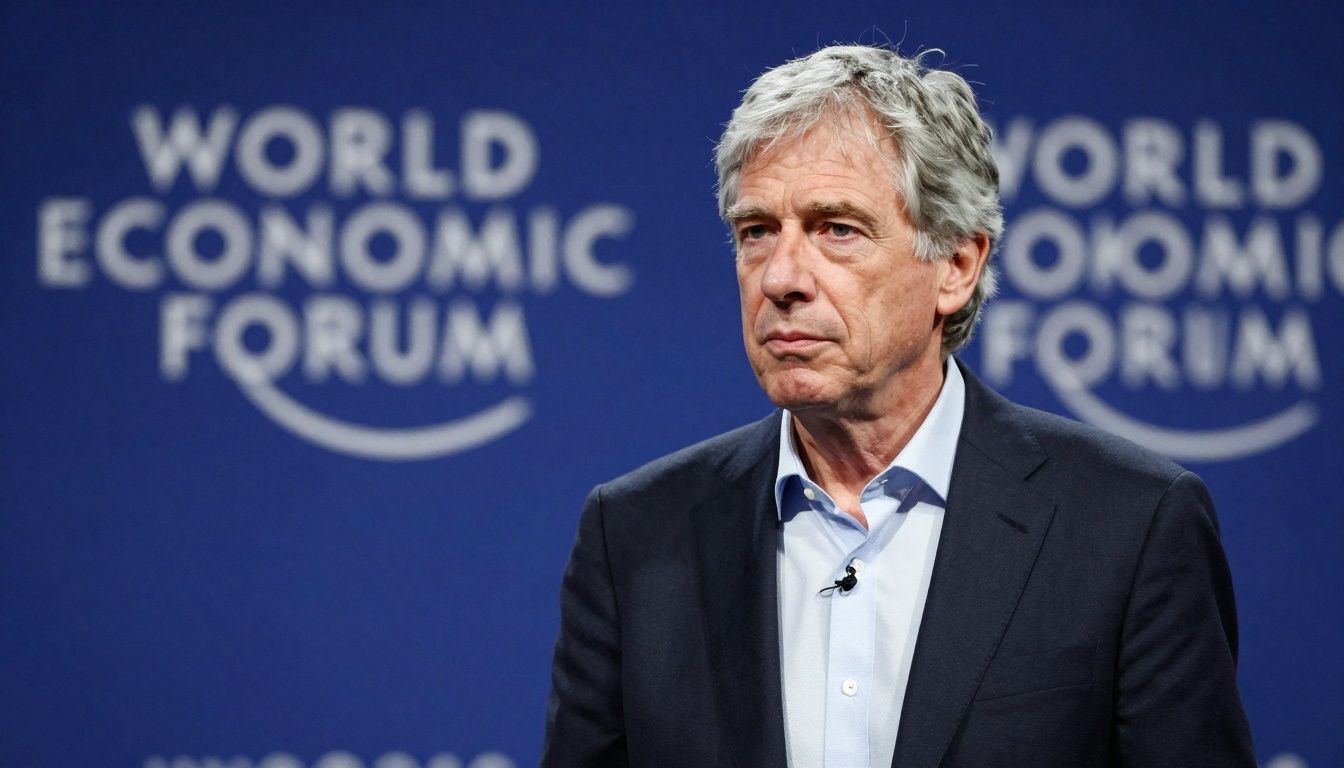

Jamie Dimon, the chief executive of JP Morgan, has voiced concerns that the rapid advancement of artificial intelligence could outpace society's ability to adapt, potentially leading to significant societal disruption and "civil unrest." Speaking at the World Economic Forum in Davos, Dimon suggested a phased introduction of AI technologies, supported by collaborative efforts between governments and businesses to retrain and support displaced workers.
Key Takeaways
- JP Morgan CEO Jamie Dimon advocates for a slower, managed rollout of AI to prevent societal upheaval.
- Dimon highlights the potential for job displacement and the need for government and business intervention.
- Nvidia CEO Jensen Huang offers a contrasting view, emphasizing AI's job creation potential.
The Need for a Phased Approach
Dimon stressed that while AI offers immense benefits, including increased productivity and advancements in healthcare, its rapid integration could lead to substantial job losses. He pointed to the potential impact on millions of commercial lorry drivers in the US, whose livelihoods could be threatened by the advent of driverless trucks. "Should you do it all at once, if 2 million people go from driving a truck and making $150,000 a year to a next job [that] might be $25,000? No. You will have civil unrest. So phase it in," Dimon stated.
He urged businesses and governments to proactively develop strategies for retraining, relocation, and early retirement programs to mitigate the negative consequences of AI-driven automation. Dimon believes that without such measures, the societal benefits of AI could be overshadowed by widespread economic hardship and social instability.
A Counterpoint from Nvidia
In contrast to Dimon's cautionary stance, Jensen Huang, the CEO of Nvidia, a leading AI chip manufacturer, presented a more optimistic outlook. Huang argued that the current focus on job losses due to AI is misplaced, asserting that the technology is, in fact, a significant job creator. He described the ongoing development of AI infrastructure as the "largest infrastructure buildout in human history," which will generate numerous employment opportunities.
Huang highlighted that many of these new roles are in skilled trades, such as plumbing, electrical work, construction, and network maintenance, essential for building and maintaining AI data centres and factories. He also suggested that AI presents a unique opportunity for Europe to leverage its strong industrial manufacturing base and potentially surpass Silicon Valley in certain technological sectors.
Broader Economic and Political Context
Dimon also touched upon broader geopolitical issues, offering a measured critique of US President Donald Trump's approach to international relations. He advocated for using "moral persuasion, our economic persuasion, our intelligence and military" to encourage Europe to act in its own best interests, rather than relying solely on American leadership. Furthermore, Dimon expressed concern over immigration policies, calling for a more humane approach and emphasizing the valuable contributions of migrants to the US economy.