
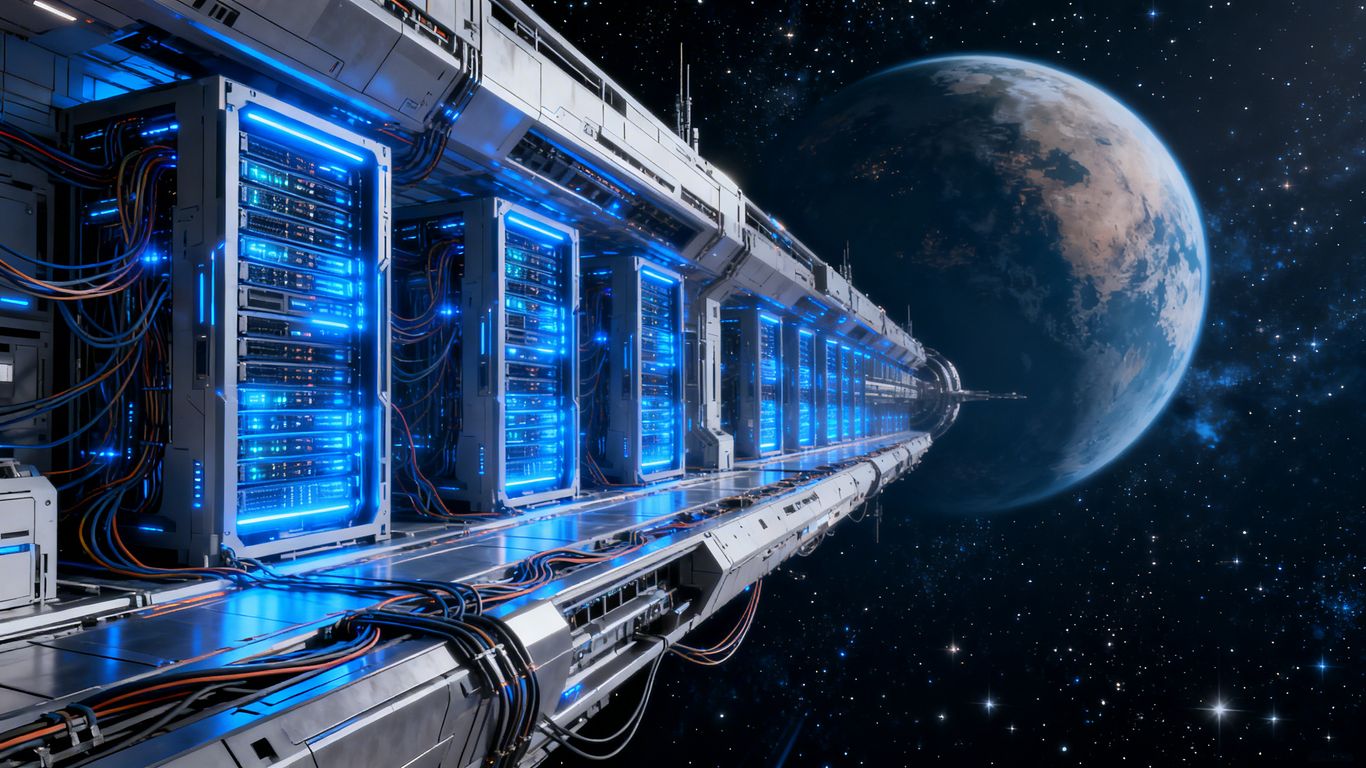
This week marks a significant moment as the first AI data center is set to launch into space. This isn't just a small step; it's a bold move towards building the majority of our future data centers off-world. The idea is that the vast energy and extreme cold available in space could soon make it more practical to house these facilities there than on Earth.
Why We Need More Data Centers
The demand for data centers is exploding, driven by the incredible potential of Artificial Intelligence. Think about the possibilities: new medical treatments, self-driving cars, and even a super-smart assistant in your pocket. To make these AI dreams a reality, we'll need a lot more data centers and a massive increase in energy production to power them.
But it's not just about the exciting possibilities. There's also a serious national security angle. If the US doesn't keep up with AI development, there's a real risk of falling behind competitor nations. This means we need more data centers, and fast.
The Problem with Building on Earth
So, why can't we just keep building data centers on Earth? Well, the numbers are staggering. Some estimates suggest that in the next three years alone, the US will need an additional 50 to 100 gigawatts of power – that's like building 50 to 100 new nuclear power stations! The reality is, getting permits and dealing with other constraints make this incredibly difficult, if not impossible. This is already causing energy prices to skyrocket. Plus, we're using up vast amounts of water from rivers and reservoirs just to keep these data centers cool. Communities are starting to push back; Tucson, Arizona, recently became the first US city to unanimously reject a new data center proposal due to concerns about energy and water usage. This isn't an isolated incident; it's happening in towns and cities worldwide.
A Glimpse of Data Centers in Space
Visualising a data center in space might seem like science fiction, but the concept is becoming more concrete. Imagine a Starship-sized spacecraft housing a 100-ton module of AI chips, connected to a 5-gigawatt power cluster, supported by a 4-kilometre solar panel array and a 1-kilometre radiator. While the initial reaction to this idea has been met with skepticism, even ridicule, the team behind it is moving forward.
Key Takeaways
- The rapid growth of AI necessitates a significant increase in data center capacity.
- Building new data centers on Earth faces major hurdles related to energy, water, and permitting.
- Space offers abundant energy and extreme cold, potentially solving the data center resource challenge.
- Advancements in reusable rocket technology are making space launches more affordable and accessible.
- The economic viability of space-based data centers hinges on reducing launch costs.
The Rise of Reusable Rockets
The idea of building data centers in space gained traction with the development of new, fully reusable rockets like SpaceX's Starship. Unlike older rockets that are discarded after a single use, reusable rockets dramatically reduce launch costs and increase capacity. This means we can send much more mass to space for a fraction of the price. Other companies are also developing similar technologies, promising a future where getting to space is significantly cheaper and more frequent.
Space vs. Earth: An Economic Comparison
Let's break down the costs. Building a solar-powered data center on Earth involves several major expenses:
- Permitted Land: Acquiring land, especially in North America, can be a significant cost, often tied to energy prices.
- Battery Storage: Solar power isn't constant, so batteries are needed to store energy for nighttime use.
- Solar Cells: The cost of the solar panels themselves.
Now, compare this to a solar-powered data center in space:
- No Land Costs: We don't need to buy land.
- No Battery Storage: Space offers 24/7 sunlight, eliminating the need for batteries.
- Less Solar Material: One square meter of solar panel in space produces six times more energy than on Earth, meaning we need far fewer panels.
The main additional cost in space is launch cost – getting the chips, solar panels, and radiators into orbit. However, with projected launch costs around $500 per kilogram, which is within reach of current reusable rocket capabilities, space-based data centers become economically competitive. The break-even point occurs when launch costs are lower than the combined costs of land, batteries, and six times the solar material needed on Earth.
A Peaceful Future Through Space Resources
As global tensions rise and competition for Earth's finite resources intensifies, the need for new energy and water sources becomes paramount. The competition for these resources could be a major driver of future conflicts. By shifting our focus to the near-limitless energy of the solar system, we can reduce the competition for resources on Earth. This move towards space-based infrastructure, like data centers, could be a pathway to a more peaceful future, fulfilling the promise made generations ago to prevent future wars. In the coming decade, we might see most new data centers being built in space, not just for AI, but for the sheer abundance of energy available.