
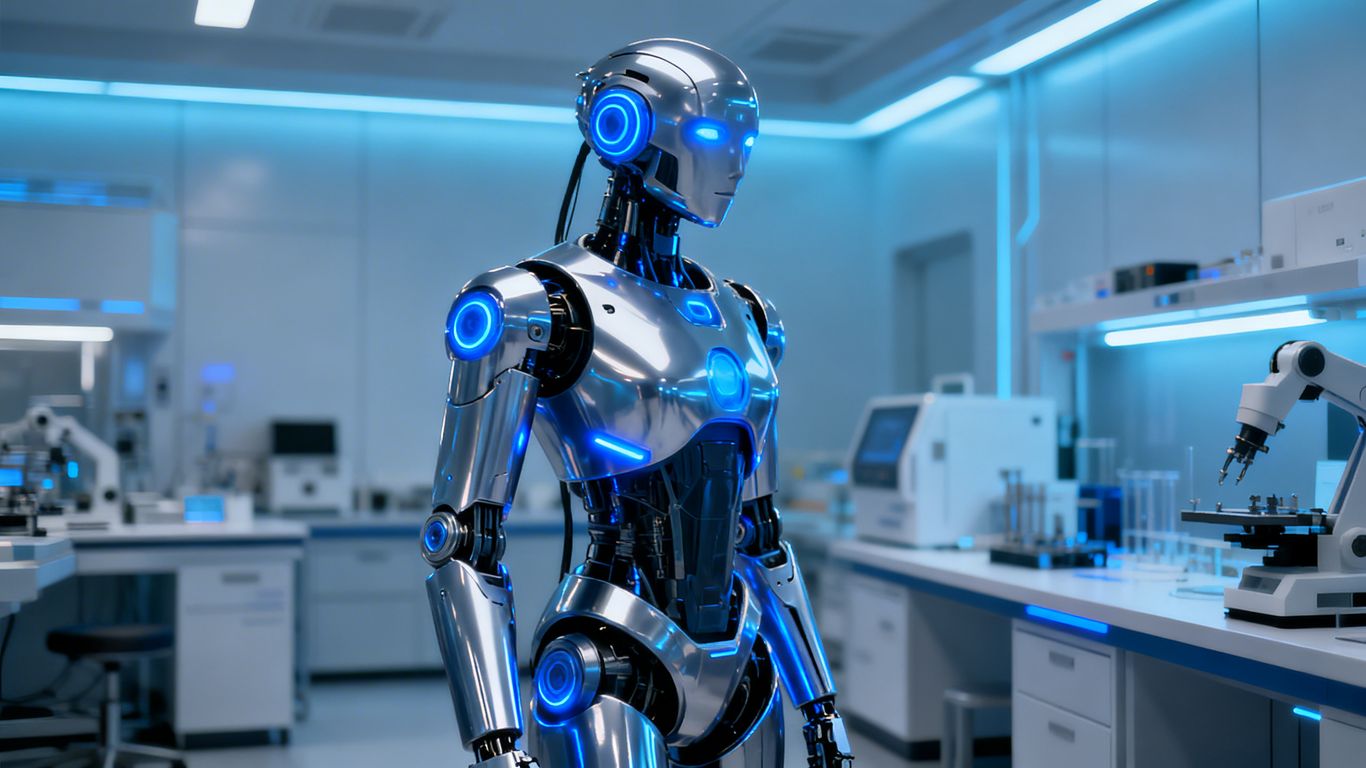

Alibaba has officially entered the competitive landscape of physical artificial intelligence with the unveiling of RynnBrain, an open-source AI model designed to empower robots with enhanced environmental perception and task execution capabilities. This strategic move by the Chinese tech giant signals a significant push into robotics, aiming to challenge established players like Nvidia and Google in a rapidly evolving sector.
Key Takeaways
- Alibaba launches RynnBrain, an open-source AI model for robotics.
- The model enables robots to perceive environments and perform physical tasks.
- This move intensifies competition with Nvidia, Google, and Tesla in physical AI.
- Alibaba's open-source strategy aims to accelerate adoption and innovation.
- The development aligns with China's broader ambitions in AI and robotics leadership.
Entering the Physical AI Race
Alibaba's DAMO Academy has developed RynnBrain, a vision-language-action (VLA) model that integrates computer vision, natural language processing, and motor control. This allows robots to interpret their surroundings and execute appropriate actions, moving beyond pre-programmed instructions to adaptive, real-time decision-making. Video demonstrations have shown RynnBrain-powered robots successfully identifying and sorting objects, such as fruit, tasks that require sophisticated AI for object recognition and precise movement.
An Open-Source Strategy
In contrast to some competitors, Alibaba is adopting an open-source approach for RynnBrain, making it freely available to developers. This strategy, similar to its successful Qwen family of language models, aims to foster widespread adoption and accelerate innovation within the robotics AI community. By lowering the barrier to entry, Alibaba hopes to build a robust ecosystem around its technology.
Competition and Market Dynamics
The launch places Alibaba directly in competition with tech giants like Nvidia, which offers its "Cosmos" brand for robotics AI, and Google DeepMind with its Gemini Robotics-ER 1.5. Tesla is also a significant player with its Optimus humanoid robot. The global race for physical AI is driven by increasing labour shortages and an aging population in many advanced economies, creating a substantial market opportunity estimated to be worth trillions of dollars by mid-century. China, in particular, is heavily investing in robotics, with companies planning significant production ramp-ups.
The Future of Physical AI
Physical AI represents a fundamental shift from traditional automation to autonomous decision-making in real-world environments. While technical capabilities are advancing rapidly, the article also highlights the emerging importance of governance frameworks for the safe and scalable deployment of these systems. Alibaba's entry with RynnBrain underscores the intensifying global competition and the strategic significance of embodied intelligence in shaping the future of industries from manufacturing and logistics to healthcare and beyond.