
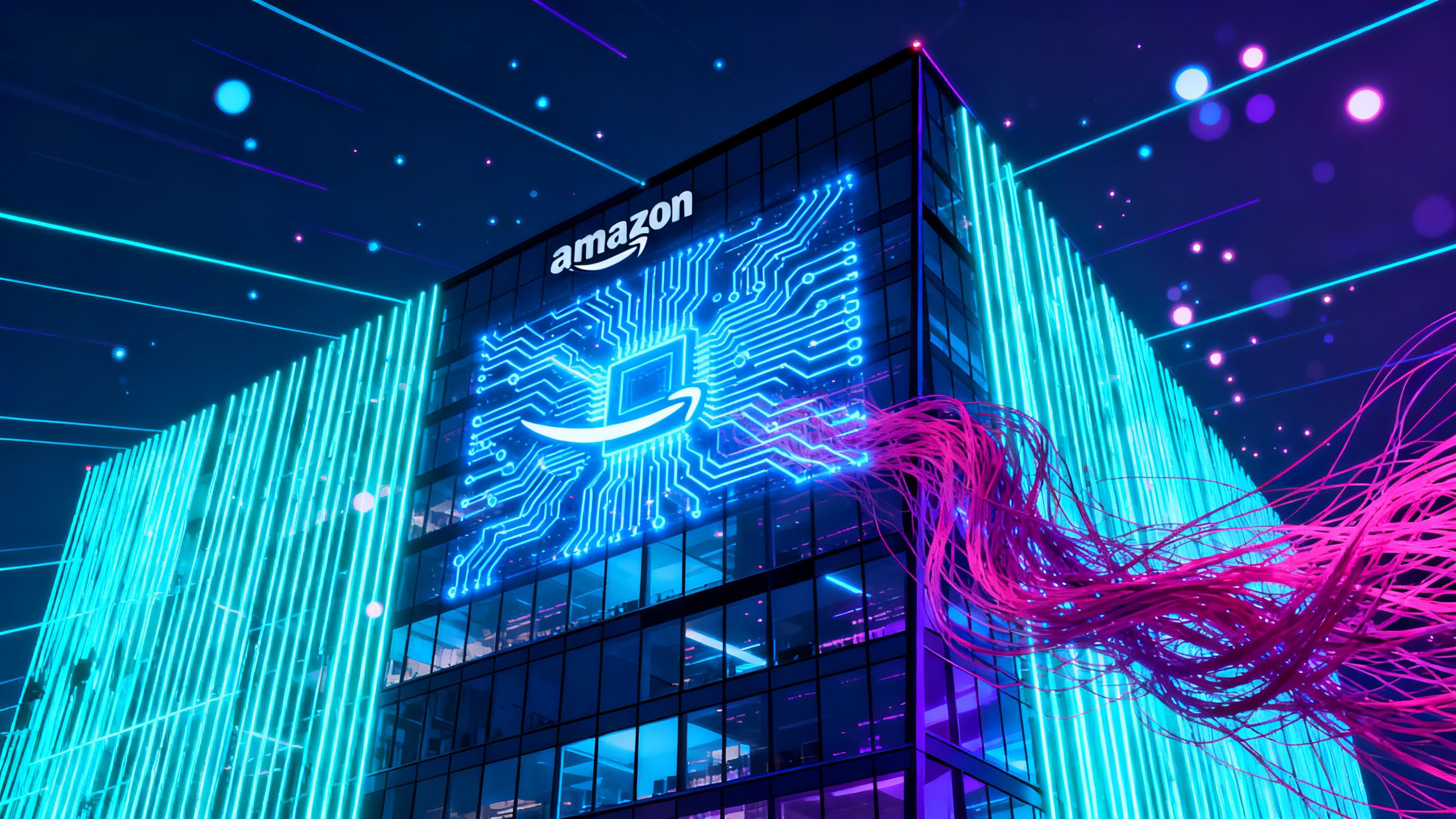

Amazon has announced a significant increase in its capital expenditure, projecting a massive $200 billion investment this year, with a substantial portion dedicated to artificial intelligence (AI) and related infrastructure. This aggressive spending plan, a notable jump from the previous year's $125 billion, has led to a sharp decline in Amazon's share price, reflecting investor concerns about the escalating costs and potential market bubbles in the AI sector.
Key Takeaways
- Amazon plans to invest $200 billion in capital expenditure this year, primarily for AI development.
- The company's shares fell over 11% in after-hours trading following the announcement.
- This move places Amazon among the most aggressive AI investors in Big Tech, alongside Microsoft, Google, and Meta.
- Concerns about an AI market bubble and the need for demonstrable returns on investment are growing among analysts and investors.
The AI Spending Spree
Amazon's projected $200 billion investment is earmarked for "AI, chips, robotics, and low earth orbit satellites," according to CEO Andy Jassy. He emphasized that AI represents an "unusual opportunity" that will fundamentally reinvent customer experiences and become profitable in the future. This significant outlay positions Amazon as a leading investor in the AI race, joining other tech giants like Meta, which plans to spend up to $135 billion, and Google, with a projected $175 billion to $185 billion investment.
Investor Concerns and Market Sentiments
The substantial increase in AI spending has not been met with universal investor enthusiasm. Amazon's share price drop of over 11% highlights growing anxieties about the sustainability of such high investment levels. This sentiment is echoed across the tech sector, with Meta, Microsoft, and Google also experiencing share price fluctuations amid concerns about the potential for an AI market bubble. Experts, including those from the Bank of England and JPMorgan Chase, have warned of potential "sharp corrections" and the risk of significant financial losses on AI investments.
Competitive Landscape and Future Outlook
The collective planned spending by the top four hyperscalers—Amazon, Microsoft, Google, and Meta—is expected to exceed $630 billion in 2026. While Amazon Web Services (AWS) continues to show strong growth, contributing significantly to the company's profits, the sheer scale of capital expenditure raises questions about future returns. Amazon is also investing in its e-commerce operations, including expanding delivery capabilities and its grocery offerings, alongside strategic shifts in its physical store presence. The company has also noted efficiency gains from AI use, which have contributed to workforce adjustments.