
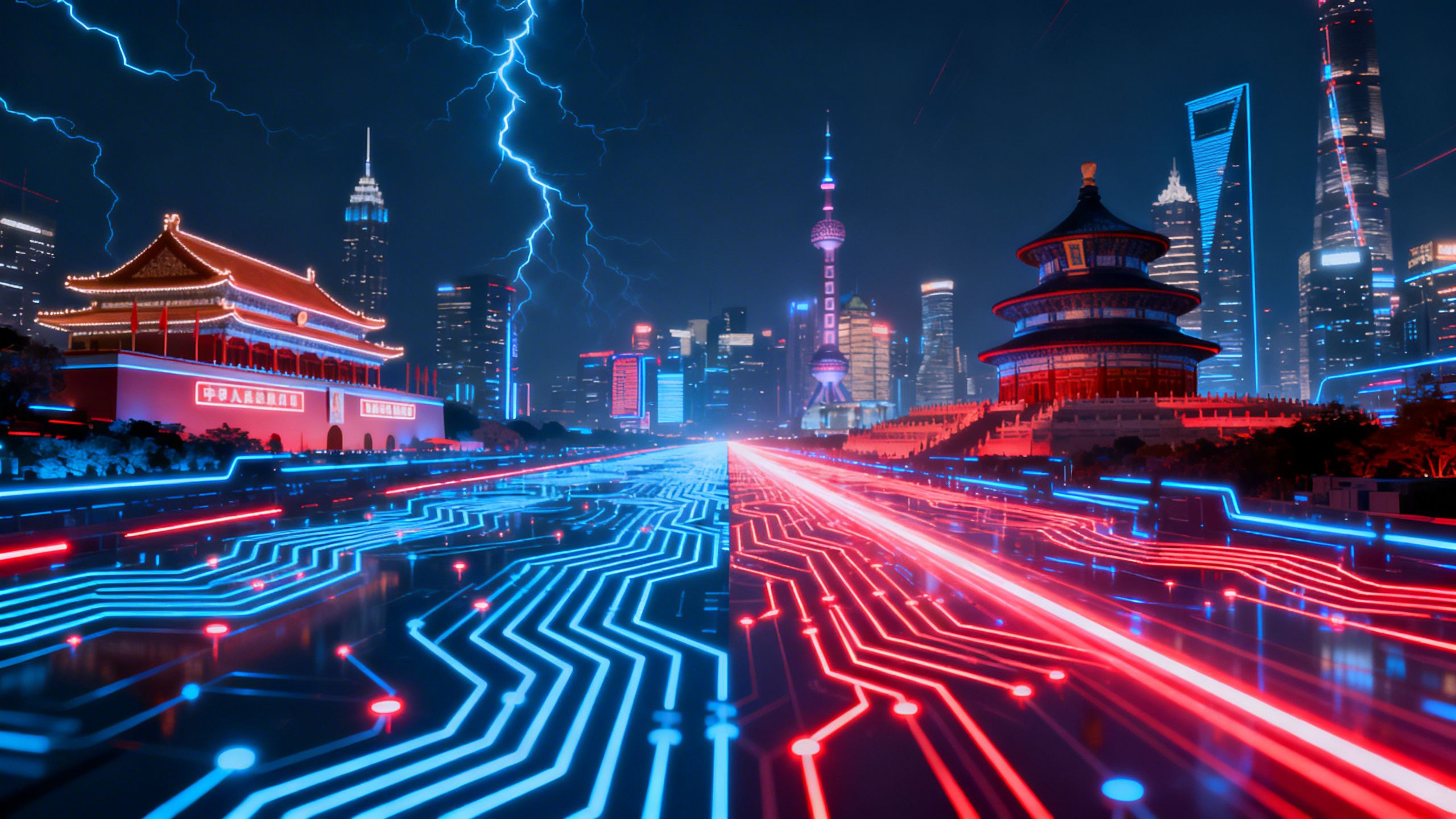

In recent years, China's rapid progress in artificial intelligence (AI) and other advanced technologies has sent ripples across global markets, challenging the long-held dominance of the US and its Silicon Valley heavyweights. Experts now warn that this so-called "tech shock" is only just beginning, and the next decade could radically reshape global tech leadership.
Key Takeaways
- China is closing the AI gap with the US, thanks to significant state investment, innovation, and a robust supply chain.
- Affordable, homegrown AI and technology hardware mean China is well-positioned to serve developing markets.
- US tech giants face increasing scrutiny about their high AI investments and uncertain returns.
China's Surge Up the Value Chain
China has historically been seen as a fast follower, leveraging its manufacturing might to churn out low-cost gadgets and technologies designed elsewhere. Today, that narrative no longer holds true. Chinese firms are now on the cutting edge of AI, electric vehicles, advanced batteries, and robotics.
One striking example is the Chinese startup DeepSeek, which recently launched an AI language model that rivals even the most sophisticated American counterparts in performance—at a fraction of the cost. This new wave of AI development is propelled in part by massive government support, with Beijing funnelling billions into its "AI+" initiative.
Shifting Global Tech Spheres
China's technological advancement isn't limited to the domestic market. The country is actively forming a "China tech sphere"—a global ecosystem based on its lower-cost, highly scalable platforms. Many emerging economies now face a stark choice: choose between more expensive Western tech, or opt for Chinese alternatives complete with affordable financing. As a result, within the next five to ten years, a majority of the world's population could be running on a Chinese tech stack.
US Tech Feels the Pressure
Across Wall Street, US tech giants such as Amazon, Alphabet, and Microsoft are under growing pressure to justify sky-high spending on AI projects. Recent market jitters have wiped billions from their valuations amid questions about return on investment, especially as China proves that disruptive innovation can sometimes come from nimble startups rather than deep-pocketed incumbents.
AI, Investment, and the Road Ahead
Leading analysts point to China's strengths: government backing, ability to pair innovation with cost-effective production, and an ability to act quickly at scale. While US hyperscalers have committed to spending hundreds of billions on AI this year, China's tightly coordinated public-private partnerships and willingness to rapidly implement new tech across industry and society give it an edge in the race for global influence.
The bottom line: The era of uncontested US tech leadership is over. As China accelerates its technology ambitions, the coming "AI decade" is likely to feature fierce competition for both innovation and influence, rewriting the rules of global technology for years to come.