
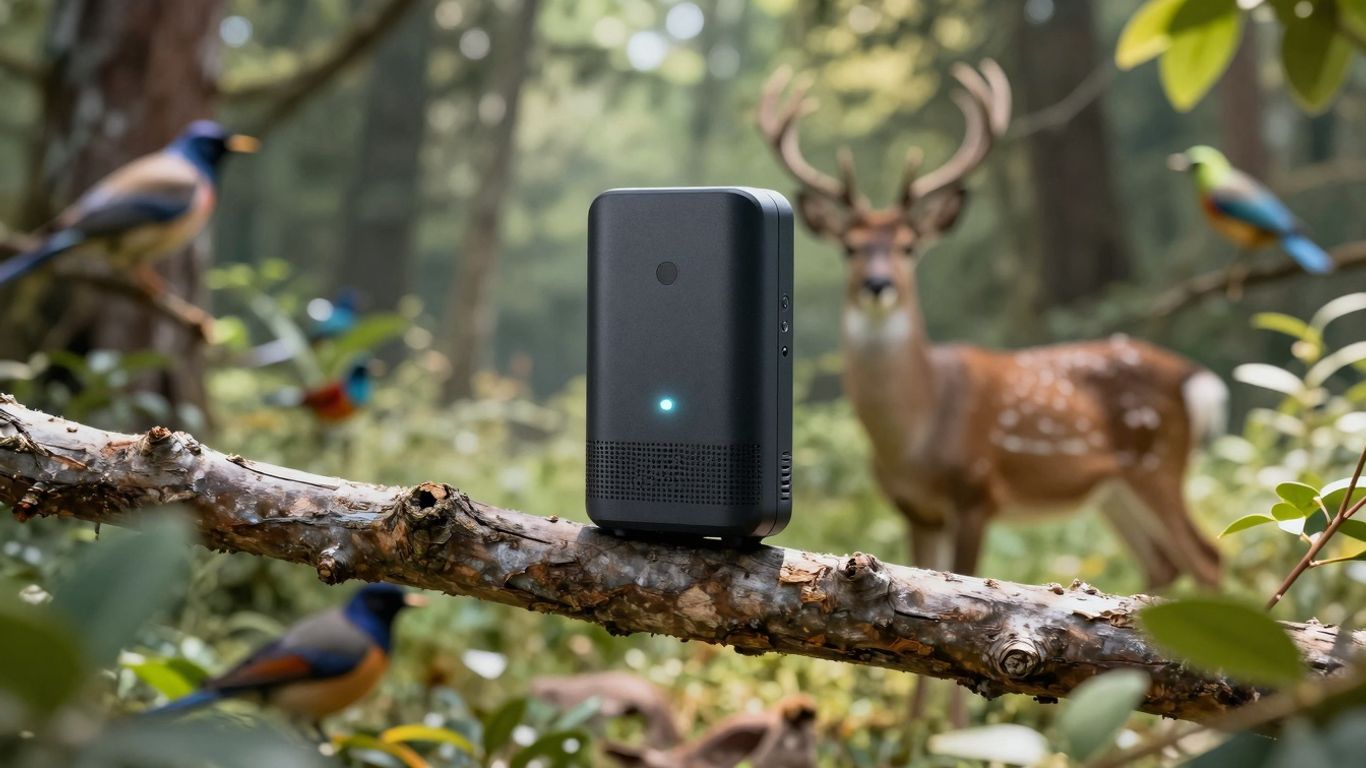
Conservationists often face tough conditions, trekking through difficult terrain just to swap batteries or memory cards in vital camera traps and audio devices. This is the current reality for many, despite having smart fridges that text us when we're low on milk. It's a heroic effort, but incredibly slow. Juan M. Lavista Ferres, chief data scientist at the AI for Good Lab, realised that current solutions weren't making enough of a difference. He introduced SPARROW, a system designed to change how biodiversity data is collected and analysed.
Key Takeaways
- SPARROW is an open-source, solar-powered AI system for real-time biodiversity monitoring.
- It simplifies data collection, reducing the need for manual trips into the field.
- The system uses AI to analyse images and sounds, identifying species and even individual animals.
- SPARROW can detect early signs of threats like wildfires, sending alerts to authorities.
- The goal is to shift biodiversity data analysis from months to days, aiding conservation efforts.
Rethinking Conservation Data Collection
Juan M. Lavista Ferres shared his experience presenting AI models at a biodiversity conference. While the models were advanced, he realised the immense effort conservationists put into setting up devices, collecting data, and then analysing it. This led him to believe that a fundamental change was needed in how biodiversity data is handled. This is how SPARROW was born.
SPARROW, which stands for Solar-Powered, Remote Audio Recording, and Monitoring Watch, is a network of small, solar-powered devices. These devices act as hubs in natural environments, connecting to camera traps, audio recorders, and sensors. They process information on-site using low-power processors and send results back via low-orbit satellites. The idea is simple: install it once, and then access data online in real-time, eliminating the need for constant field trips.
The Power of Simplicity
Lavista Ferres highlighted a key lesson: humans are drawn to complexity, but for real-world impact, solutions need to be simple. "If you want to make an impact in the world, and you want people to use your solutions, your solutions must be simple," he stated. Building simple solutions is hard, but it's worth the effort. SPARROW was designed with simplicity in mind: easy to develop, deploy, and assemble.
SPARROW is open-source, meaning anyone – from conservationists to researchers to park rangers – can use and improve it. You don't buy SPARROW; you buy off-the-shelf components and assemble them. If you can put together flat-pack furniture, you can likely assemble SPARROW.
Smarter Data Analysis with AI
Camera traps have been around for decades, but they often capture thousands of images with little to no wildlife, mostly due to movement from wind or other environmental factors. Conservationists then spend hundreds of hours sifting through these images. SPARROW tackles this by using AI models that can automatically classify and identify animals in photos.
But SPARROW goes further. It can not only find a giraffe but can identify that specific giraffe. Animals like giraffes have unique patterns, like a fingerprint, which can be used for re-identification. This is vital for conservation, helping to understand survival rates and population numbers. SPARROW can do this automatically.
Listening to the Forest
Images are important, but they can sometimes miss the bigger picture. SPARROW also analyses sounds. It can isolate and classify different animal calls, from frogs to cicadas to parrots. By listening to the forest, SPARROW can help measure the true health of an ecosystem. Identifying sounds requires deep expertise, often involving hours of listening to recordings. SPARROW can help experts like Paula Caicedo from Fundación Biodiversa Colombia by training the system to focus on specific animal calls, saving her hundreds of hours and allowing her to focus on her conservation work.
Real-Time Alerts for Early Intervention
Because SPARROW is connected online, it can send alerts. Wildfires are a major global threat, and every minute counts. SPARROW has the capability for early fire detection, sending alerts to authorities. This means that with SPARROW, data isn't just collected; it leads to action that can save lives.
By the end of 2025, SPARROW is expected to be operational on all continents. It aims to change biodiversity data analysis, moving from months to days. For some species, this speed difference could be the line between survival and extinction. Lavista Ferres dedicated his talk to the conservationists who risk their lives for biodiversity, calling them superheroes who need better tools to fight for our planet.