
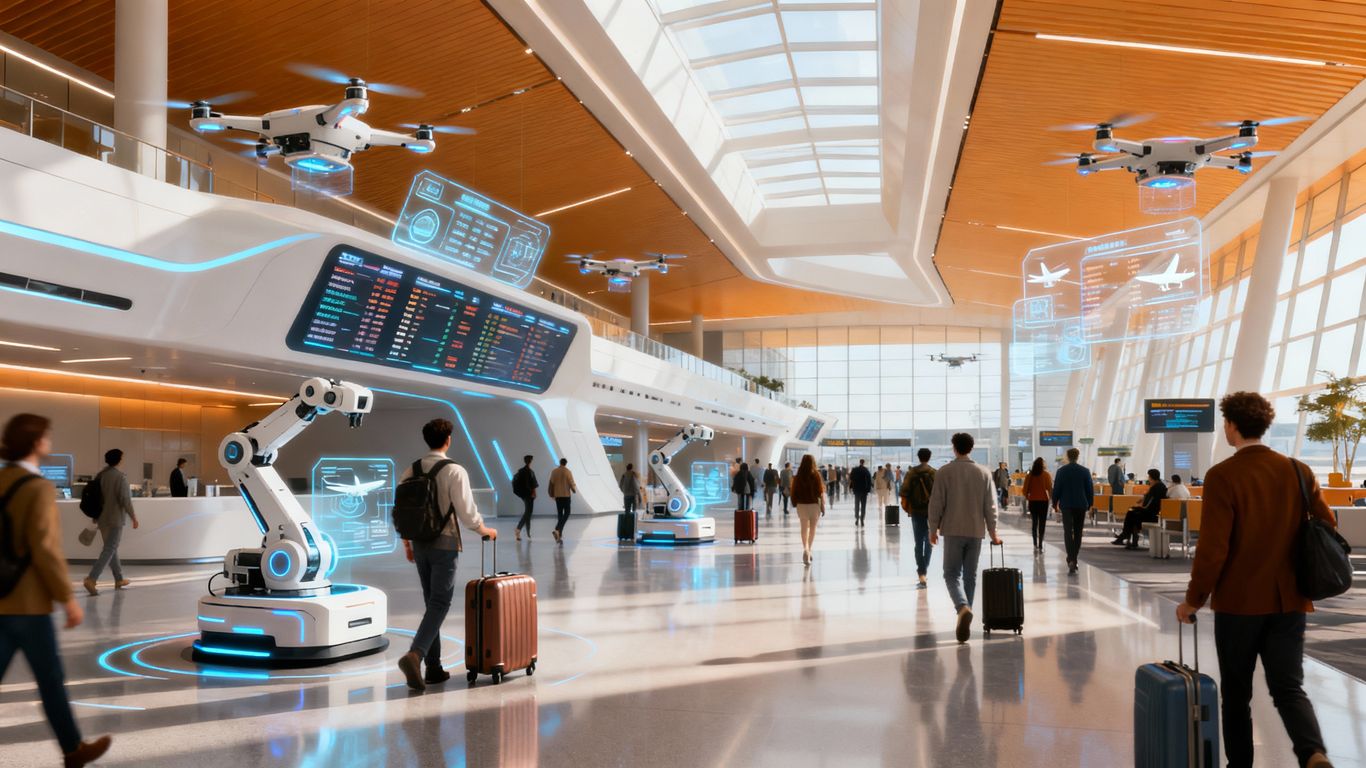

Airports worldwide are increasingly turning to Artificial Intelligence (AI) to navigate the complexities of growing passenger traffic and enhance operational efficiency. From managing crowds and predicting delays to streamlining check-ins and baggage handling, AI is becoming an indispensable tool in modern aviation.
Key Takeaways
- AI is being integrated into airport workflows to improve passenger flow, security, and customer experience.
- Predictive analytics help anticipate congestion at various points, shifting operations from reactive to proactive.
- AI-powered baggage optimisation and biometric processing are enhancing passenger journeys.
- The technology aids in automated check-ins, boardings, and predictive maintenance.
- Airports are leveraging AI to improve on-time performance and reduce ground delays.
- Sustainability goals are also being supported through AI, such as monitoring energy consumption and reducing emissions.
Enhancing Passenger Flow and Experience
Airports are deploying AI-powered analytics to anticipate congestion at security, immigration, and boarding gates, thereby preventing delays. This allows for a shift from reactive crowd management to predictive operations. AI is also instrumental in baggage optimisation and the implementation of biometric processing, which can enable passengers to pass through immigration without presenting physical passports. This focus on AI aims to improve the passenger experience while maintaining operational efficiency.
Streamlining Ground Operations and On-Time Performance
At Munich Airport, the adoption of Assaia’s ApronAI tool is set to speed up aircraft turnarounds. This AI-powered system uses live video feeds and computer vision to monitor every stage of an aircraft's turnaround, from arrival to pushback. It detects key milestones in real-time, predicts estimated off-block times, and alerts staff to potential delays or safety issues. This technology has been shown to reduce ground delays and average turnaround times, leading to improved on-time performance and better gate utilisation.
Driving Sustainability Through Technology
AI is also playing a crucial role in helping airports achieve their sustainability targets. For instance, AI-driven HVAC systems can optimise heating, cooling, and ventilation in real-time, leading to significant energy savings. Munich Airport is using intelligent control systems in parking garages that have reduced emissions by around 70%. Furthermore, AI is being used to monitor the use of aircraft auxiliary power units (APUs), which contribute to ground emissions, thereby supporting reductions in CO₂ emissions.
The Future of AI in Aviation
The integration of AI into airport operations is revolutionising air travel, making it smoother, faster, and more efficient. Major airports are deploying AI systems to predict flight delays, monitor air traffic, and coordinate ground transport. While the aviation sector has been cautious in adopting new technologies due to its safety-critical nature, the rapid advancements in AI are paving the way for a more intelligent and seamless travel experience for passengers in the coming years.
Sources
- How smart tech is optimising your airport, International Airport Review.